New book · Out now
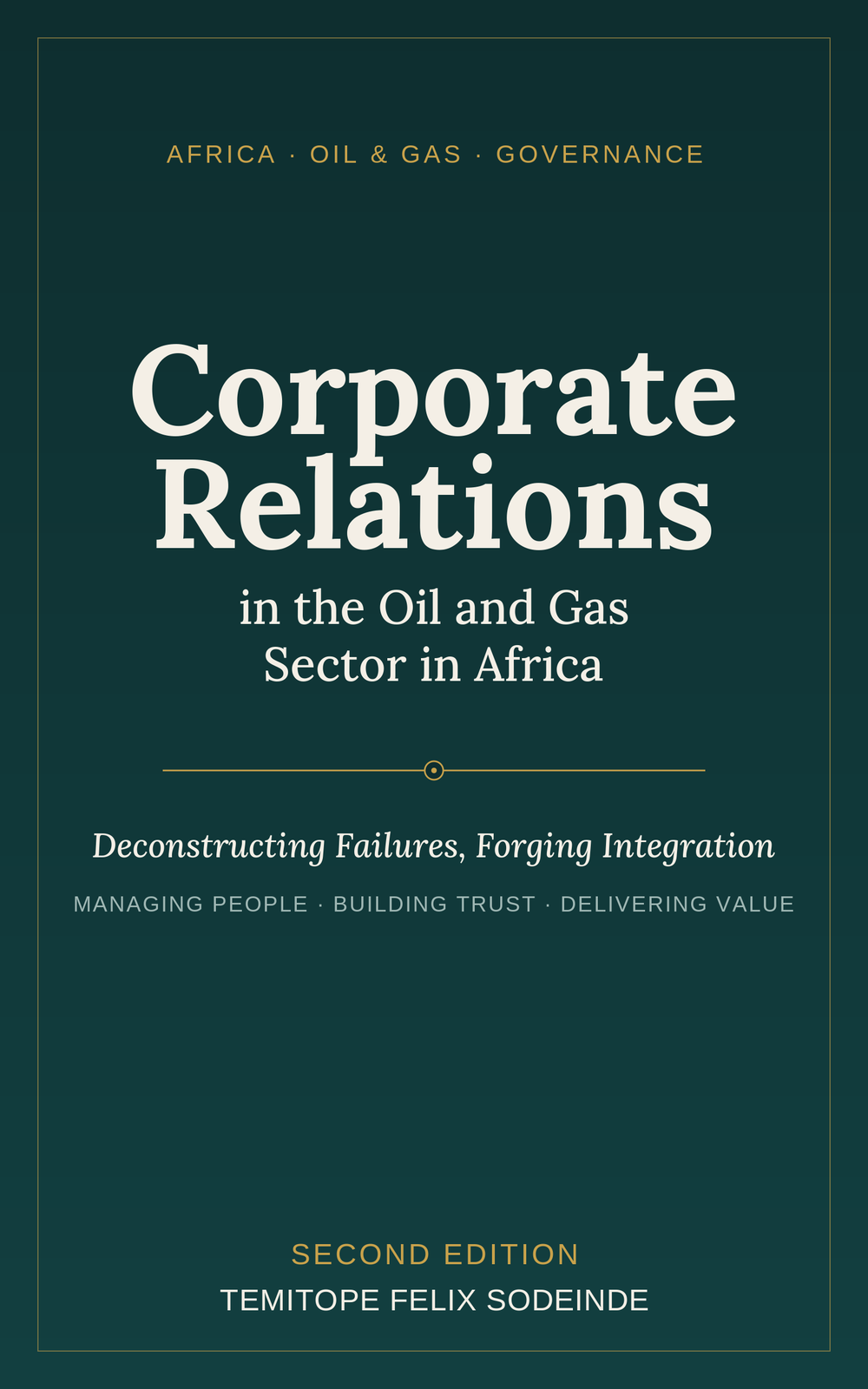
Corporate Relations in the Oil and Gas Sector in Africa
Deconstructing Failures, Forging Integration
Africa pumps more than seven million barrels of oil a day, and in producing countries the sector is the financial spine of the state. Yet the wealth routinely arrives as pollution, broken promises and conflict instead of schools, savings and stability. The difference is not geology. It is the quality of the relationships among governments, companies and communities.
Second edition · by Temitope Felix Sodeinde
Secure checkout on Selar. The paperback is on the way, tell us to notify you.
What it argues
This book deconstructs why those relationships break, and shows how to forge integration in their place. Drawing only on the public record, it grounds every claim in real, cited cases: Mozambique's hidden-debt collapse, the Niger Delta's revenue and ruin, Ghana's revenue rules that hold, Chad's safeguard that failed, Botswana's escape from the resource curse, and the contested East African pipeline. From these it builds a practical playbook around three fixable deficits, transparency, fiscal stewardship and local value, and the human core of trust, engagement and mutual value that turns extraction into shared prosperity.
Written for the people who can actually change the sector, and built to teach from, it is both a reference and a field guide for a continent at an energy crossroads.
What's inside
Who it's for
- Policymakers and regulators designing host-community and local-content frameworks
- Oil, gas, mining and infrastructure leaders, and their community-relations teams
- Project and asset directors carrying schedule risk they cannot control from the site
- Community and civil-society organisations
- Investors, lenders and DFIs assessing social risk on African infrastructure
- Trainers, lecturers and consultants who teach all of the above
About the author
Temitope Felix Sodeinde has spent more than fifteen years where ambitious energy and infrastructure ventures meet the governments, regulators and communities that decide whether they proceed. His work is the architecture of consent: the stakeholder, governance and reputation systems that let large projects earn a licence to operate and hold it across political cycles, regulatory change and community pressure. That practice spans a cross-border energy asset operating across four West African jurisdictions, alongside ventures that turn hard-won field knowledge into repeatable systems, from sustainability advisory to conflict-diagnostic software. A graduate of the University of Ibadan, he works across West Africa, the United Kingdom and the United States, and lives in Lagos. His conviction is plain: consent is not given once; it is earned, governed and defended.
Format: e-book (available now), paperback (in production) · Category: Business, Energy, African Studies, Public Policy
Begin a conversation